
Sex Offender Checks in Mono County
The California Megan's Law Website is the official public starting point for a Mono County sex offender check. California Department of Justice manages the registry and publishes only information that state law allows the public to see. Searchers may begin with a known name or narrow the map by city, ZIP code, address, or Mono County. The county does not maintain a separate public registry that replaces the state site.
Local jurisdiction still matters. A person living within Mammoth Lakes generally registers with the Mammoth Lakes Police Department. A registrant elsewhere in Mono County generally works with the Mono County Sheriff's Office. Those agencies send registration updates to DOJ. For a result near a county line or for someone who has lived in another state, the national search adds useful reach, but the California profile remains the source for California disclosure rules.
Mono County Registry Disclaimer
Every Mono County registry search begins with DOJ's conditions of use. The acknowledgement is not a routine pop-up. It explains that the data exists to help protect people at risk, that some registrants are not publicly displayed, and that the agency has not assessed whether a listed person will commit another offense. It also warns that local reports and registrant updates may change quickly.
The state search entry shows that legal notice before the search tools appear.
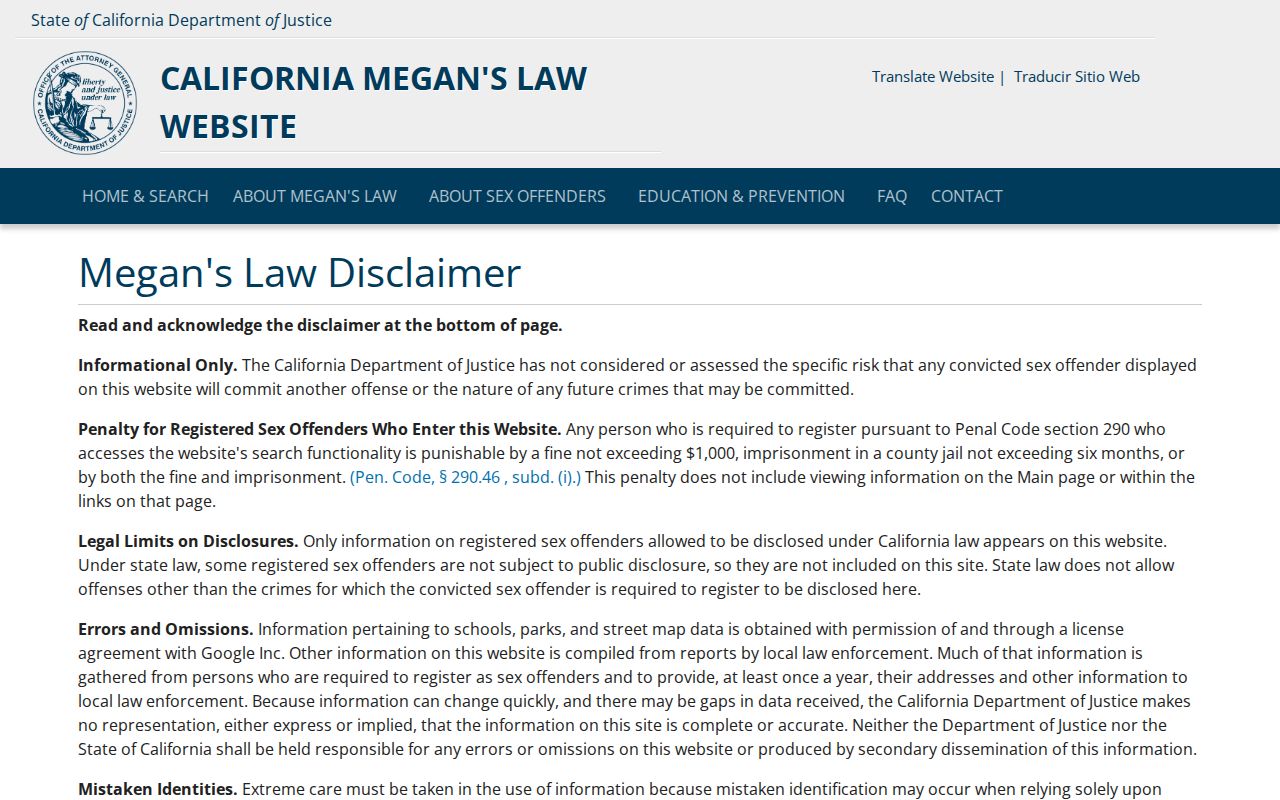
The captured entry screen reinforces why a search result should be read as a public-safety record, not as a prediction or a complete criminal history.
How Mono County Searches Megan's Law
DOJ provides several routes into the California Megan's Law Website. A name search is useful when identity is known. An address or map search supports neighborhood awareness, while city, ZIP, and county filters help keep results within Mono County. Use more than one identifier when possible, since similar names and nearby mapped locations can cause mistaken assumptions.
- Open the official registry and read the conditions. Accept them only if the search is for a lawful public-safety purpose.
- Enter a known name, or choose an address, city, ZIP, county, or map route. Select Mono County when that filter is available.
- Compare the visible identifiers and mapped location. Do not rely on a name alone.
- Open the profile and review offense, tier, location, physical descriptors, and registration status only where those fields are publicly shown.
| Field Label | Type | Required | Notes |
|---|---|---|---|
| Disclaimer acknowledgement | Checkbox or button | Yes | Required before search tools open |
| Name | Text | No | Use when the person is known |
| City or ZIP | Text or selection | No | Use Mammoth Lakes or a Mono County ZIP |
| County | Selection | No | Select Mono where offered |
| Address or map | Map search | No | Supports location-based awareness |
What Mono County Registry Results Prove
A public registry match does not show that a person poses a current or specific threat. DOJ says it has not assessed the risk that any displayed registrant will commit another offense. The page also is not a full Mono County criminal court file. It omits nonpublic registrants and may not contain every fact held by police, courts, or DOJ.
For filed charges, pleas, and case outcomes, the Mono County criminal court case process is the more relevant channel. Registry entries serve a narrower purpose: lawful safety awareness based on the information California permits DOJ to disclose.
Inside a Registry Profile
A California public profile can combine identity, appearance, location, offense, and registration fields. Display varies because Penal Code section 290.46 limits what becomes public. Searchers should treat each field as a labeled record element, not fill gaps with guesses.
| Name and aliases | Public identity names associated with the registration record. |
|---|---|
| Photo and descriptors | Photograph plus allowed age, build, hair, eyes, scars, marks, or tattoos. |
| Location | A registered address or mapped location, subject to statutory display limits. |
| Offense | Allowed offense code or description and related conviction or release detail. |
| Tier | Tier or risk information only when the public profile displays it. |
| Status | Registration or compliance status where DOJ makes that field public. |
Mono County Registration Jurisdiction
California requires a person released into the community who must register to report within five working days to the law-enforcement agency responsible for the residence. Inside Mammoth Lakes, that agency is generally the town police department. In unincorporated Mono County, the sheriff is generally the local registration agency. Appointment and verification procedures should be confirmed directly with the responsible office.
The local agency forwards registration information to California DOJ. This chain explains why an address correction starts locally even though the public searches a state website. It also explains why a recent move may not appear at once. Local reporting, agency review, and state publication are separate steps.
California's registration-law summary details that duty and timing.
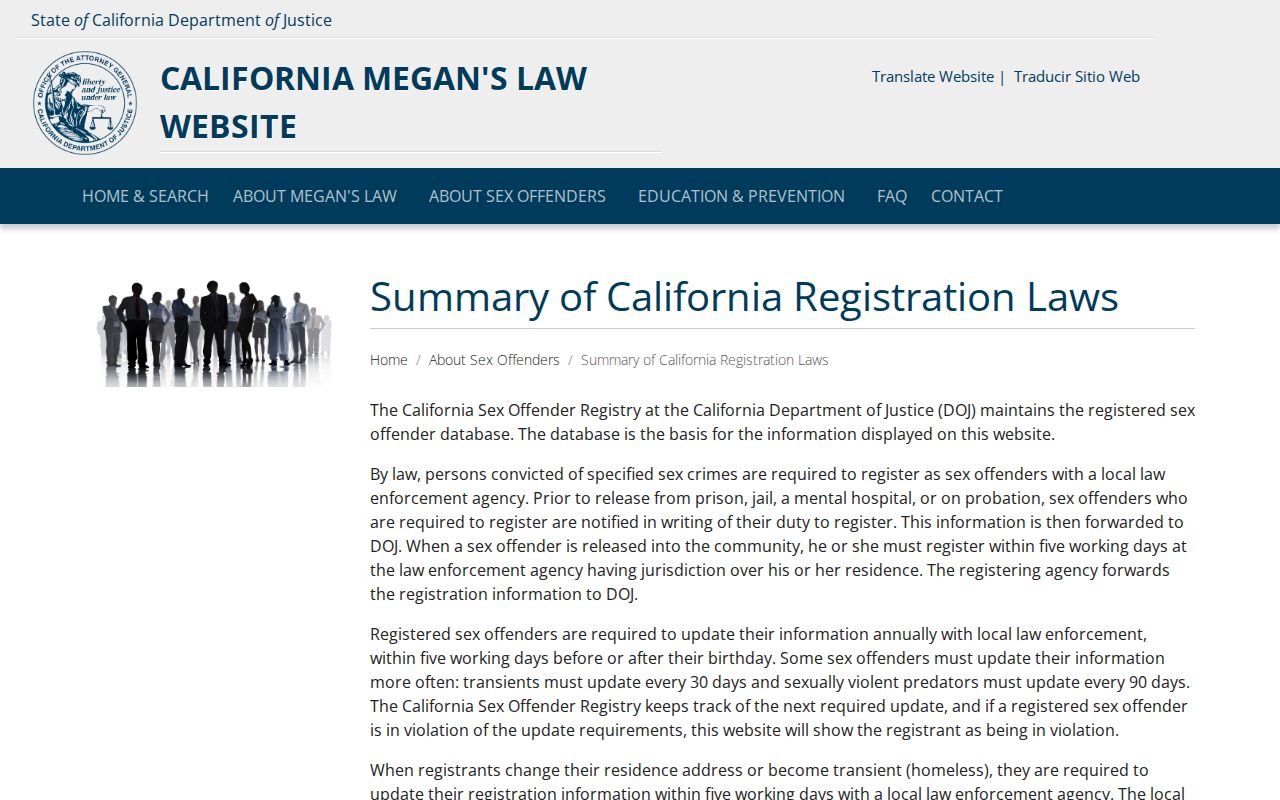
The official summary connects Mono County's local registration offices to the state rules that control deadlines and public disclosure.
California Registration Levels and Requirements
California's tier system sets minimum registration periods. Adult Tier 1 has a ten-year minimum, Adult Tier 2 has a twenty-year minimum, and Adult Tier 3 is lifetime registration. Juvenile minimums differ. A duration does not by itself tell a searcher what the public website will show, since public visibility and registration duties are governed by related but distinct rules.
| Registrant category | Minimum period | Public visibility |
|---|---|---|
| Adult Tier 1 | 10 years | Depends on California disclosure law |
| Adult Tier 2 | 20 years | Depends on California disclosure law |
| Adult Tier 3 | Life | Depends on California disclosure law |
| Juvenile Tier 1 | 5 years | May be limited or nonpublic |
| Juvenile Tier 2 | 10 years | May be limited or nonpublic |
Mono County Registry Across State Lines
The National Sex Offender Public Website provides a cross-state layer when a person recently moved, an address sits near Nevada, or the known history spans more than California. NSOPW brings participating jurisdictions into one search, while California Megan's Law remains the best place to interpret a California result and its state-specific limits.
The national portal is a complement, not a substitute. Search the same identifiers in both systems when the facts cross state lines, then return to the originating jurisdiction for correction or registration questions.
The official national portal offers a broad comparison point for a Mono County registry search.
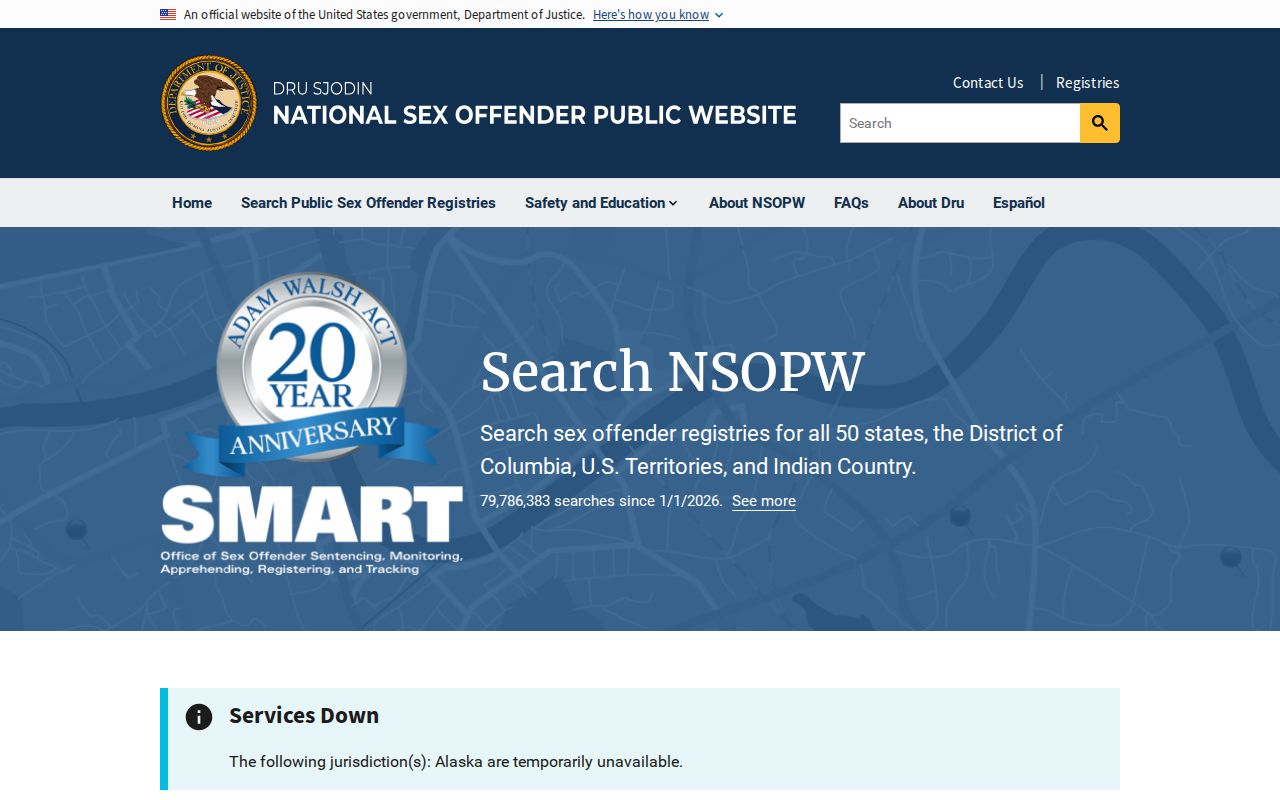
Its wider geographic reach is useful in the Eastern Sierra, but California DOJ controls the meaning and publication of California records.
Correcting a Mono County Registry Error
If a Mono County listing appears wrong, record the profile and the specific field at issue without republishing sensitive details. DOJ directs users to contact a police or sheriff's department or email MegansLaw@doj.ca.gov. Start with Mammoth Lakes Police for a residence inside town limits and the Mono County Sheriff's Office for most unincorporated addresses.
Give the agency enough detail to identify the record and explain the suspected error. Do not confront the listed person or household. The local agency can check registration data, while DOJ controls the public website. A court clerk is the right source for a separate question about filed charges or disposition, but the clerk does not edit the Megan's Law profile.
Note: Registry corrections move through the reporting agency and DOJ, so a public display may not change the moment an error is reported.
Community Notification and Lawful Use
California provides registry information for protecting people at risk and supporting community awareness. It may inform a family safety plan or a discussion with local law enforcement. It may not be turned into harassment, threats, vigilantism, or a crime against a registrant or family. Penal Code section 290.46 also creates civil and criminal consequences for misuse.
Use registry data lawfully: Penal Code section 290.46(j) warns that harassment, crime, or other misuse can lead to criminal prosecution and civil liability.
California also bars a person required to register from using the website's search function. Under Penal Code section 290.46(i), that conduct may bring a fine of up to $1,000, as much as six months in county jail, or both. These rules are part of the search conditions, not optional advice.